Level 1: Thai Massage Foundations — Floor Thai, Table Thai & Oil Thai
This foundational course introduces students to the essential principles and techniques of Thai massage through three complementary approaches: traditional floor Thai massage, clothed Thai massage on the table, and Thai oil massage.
Together, these three methods provide a broad and versatile foundation, allowing therapists to understand the traditional roots of Thai massage while learning how to adapt its techniques to different treatment environments and client preferences.
Part 1: Traditional Thai Massage on the Floor
Students begin with the foundations of traditional Thai massage, performed on a firm mat on the floor. Drawing from Thai and Ayurvedic healing traditions, this style combines rhythmic compression, joint mobilizations, assisted stretches, and mindful movement.
Participants learn structured sequences using body weight, palms, thumbs, elbows, and feet, with particular emphasis on proper body mechanics, therapist posture, breath awareness, and fluid transitions.
This meditative approach encourages mobility, relaxation, and overall balance while teaching the practitioner to work efficiently and comfortably with the whole body.
Part 2: Table Thai Massage with Clothes
Students then learn how to adapt Thai massage techniques to the massage table while the client remains fully clothed.
This approach incorporates rhythmic pressure, joint mobilizations, assisted stretches, and work along the traditional Sen lines while maintaining the oil-free nature of classical Thai massage. It offers therapists a practical and versatile way to integrate Thai techniques into a clinical or massage therapy setting.
It is particularly useful for clients who prefer to remain clothed or for therapists who want to incorporate Thai-inspired stretching and mobilization into their existing treatments.
Part 3: Oil Thai Massage
The course also introduces a fluid table-based form of Thai massage performed directly on the skin with oil.
Students learn to combine gliding techniques, focused pressure, rhythmic movements, and work along the Sen lines while maintaining the flowing and meditative character of Thai massage. Direct contact with the tissues also allows for more refined palpation and sensitivity.
This approach blends the principles of Thai massage with the familiarity of a table-based oil treatment, creating a deeply relaxing, restorative, and adaptable therapeutic experience.
By the end of Level 1, students will have developed a versatile foundation in Thai massage and will be able to work confidently using floor-based, clothed table, and oil-based table techniques.
Level 2: Advanced Traditional Thai Massage
Deepen Your Practice • Expand Your Repertoire • Refine Your Flow
Level 2 is the continuation of the foundational Thai Massage training and is designed for therapists who want to deepen their practice and develop a more sophisticated understanding of traditional floor Thai massage.
Building on the techniques learned in Level 1, students expand their repertoire with more advanced sequences, transitions, assisted stretches, Sen line work, and joint mobilizations.
The course develops more comprehensive work in the supine and prone positions while introducing extensive techniques performed in the side-lying and seated positions, allowing therapists to create longer, more varied, and highly individualized treatments.
Special attention is given to fluid transitions between positions, refined body mechanics, deeper pressure techniques, advanced stretching, and the ability to adapt treatments according to different body types, levels of flexibility, physical limitations, and therapeutic goals.
Students also continue to cultivate the mindful presence, rhythmic movement, sensitivity, and meditative flow that characterize traditional Thai massage.
By the end of Level 2, practitioners will have greater precision, confidence, and versatility, enabling them to deliver more advanced and comprehensive traditional Thai massage treatments while preserving the balance and harmony at the heart of this ancestral healing art.
Course Information
Hours
Prerequisites For Level 2
Upcoming Level 1 Courses
Sep. 16-23-30 Oct. 7-14-21-28, Nov. 4, 2026
Eight Wednesdays • 9:30am–1:00pm
Jan. 28, Feb. 4-11-18-25 & March 4-11-18, 2027
Eight Thursdays • 10:00am–1:30pm
April 1-8-15-22-29 & May 6-13-20, 2027
Eight Thursdays • 10:00am–1:30pm
Sep. 16-23-30 Oct. 7-14-21-28, Nov. 4, 2027
Eight Thursdays • 10:00am–1:30pm
Upcoming Level 2 Courses
November 18, 25 & December 2, 9, 16, 2026
Five Wednesdays • 9:30am–1:00pm
November 18, 25 & December 2, 9, 16, 2027
Five Thursdays • 10:00am–1:30pm
Reading List
Pierce, C. & Roylance, David. (2011). Encyclopedia of Thai Massage: A Complete Guide to Traditional Thai Massage Therapy and Acupressure. Findhorn Press, 2nd Edition.
Apfelbaum, Ananda. (2004). Thai Massage: Sacred Body Work. Avery; Illustrated Edition.
Chow, Kam Thye. (2004). Thai Yoga Massage: A Dynamic Therapy for Physical Well-Being and Spiritual Energy. Healing Arts Press.
Plonski, Shai. (2020). Table Thai Massage: 3 Hours of Techniques to Radically Transform Your Massage. Still Light Center.
Certification
Graduates of Level 1 will receive certification in:
Traditional Thai Massage
Table Thai Massage
Oil Thai Massage
🎁 A $100 Gift Toward Your Next Course!
Register for any course valued at $500 or more and receive a $100 voucher by email within approximately 15 minutes, valid for one year toward any future course!
Level 1: Thai Massage Foundations — Floor Thai, Table Thai & Oil Thai
This foundational course introduces students to the essential principles and techniques of Thai massage through three complementary approaches: traditional floor Thai massage, clothed Thai massage on the table, and Thai oil massage.
Together, these three methods provide a broad and versatile foundation, allowing therapists to understand the traditional roots of Thai massage while learning how to adapt its techniques to different treatment environments and client preferences.
Part 1: Traditional Thai Massage on the Floor
Students begin with the foundations of traditional Thai massage, performed on a firm mat on the floor. Drawing from Thai and Ayurvedic healing traditions, this style combines rhythmic compression, joint mobilizations, assisted stretches, and mindful movement.
Participants learn structured sequences using body weight, palms, thumbs, elbows, and feet, with particular emphasis on proper body mechanics, therapist posture, breath awareness, and fluid transitions.
This meditative approach encourages mobility, relaxation, and overall balance while teaching the practitioner to work efficiently and comfortably with the whole body.
Part 2: Table Thai Massage with Clothes
Students then learn how to adapt Thai massage techniques to the massage table while the client remains fully clothed.
This approach incorporates rhythmic pressure, joint mobilizations, assisted stretches, and work along the traditional Sen lines while maintaining the oil-free nature of classical Thai massage. It offers therapists a practical and versatile way to integrate Thai techniques into a clinical or massage therapy setting.
It is particularly useful for clients who prefer to remain clothed or for therapists who want to incorporate Thai-inspired stretching and mobilization into their existing treatments.
Part 3: Oil Thai Massage
The course also introduces a fluid table-based form of Thai massage performed directly on the skin with oil.
Students learn to combine gliding techniques, focused pressure, rhythmic movements, and work along the Sen lines while maintaining the flowing and meditative character of Thai massage. Direct contact with the tissues also allows for more refined palpation and sensitivity.
This approach blends the principles of Thai massage with the familiarity of a table-based oil treatment, creating a deeply relaxing, restorative, and adaptable therapeutic experience.
By the end of Level 1, students will have developed a versatile foundation in Thai massage and will be able to work confidently using floor-based, clothed table, and oil-based table techniques.
Level 2: Advanced Traditional Thai Massage
Deepen Your Practice • Expand Your Repertoire • Refine Your Flow
Level 2 is the continuation of the foundational Thai Massage training and is designed for therapists who want to deepen their practice and develop a more sophisticated understanding of traditional floor Thai massage.
Building on the techniques learned in Level 1, students expand their repertoire with more advanced sequences, transitions, assisted stretches, Sen line work, and joint mobilizations.
The course develops more comprehensive work in the supine and prone positions while introducing extensive techniques performed in the side-lying and seated positions, allowing therapists to create longer, more varied, and highly individualized treatments.
Special attention is given to fluid transitions between positions, refined body mechanics, deeper pressure techniques, advanced stretching, and the ability to adapt treatments according to different body types, levels of flexibility, physical limitations, and therapeutic goals.
Students also continue to cultivate the mindful presence, rhythmic movement, sensitivity, and meditative flow that characterize traditional Thai massage.
By the end of Level 2, practitioners will have greater precision, confidence, and versatility, enabling them to deliver more advanced and comprehensive traditional Thai massage treatments while preserving the balance and harmony at the heart of this ancestral healing art.
Course Information
Hours
Prerequisites For Level 2
Upcoming Level 1 Courses
Sep. 16-23-30 Oct. 7-14-21-28, Nov. 4, 2026
Eight Wednesdays • 9:30am–1:00pm
Jan. 28, Feb. 4-11-18-25 & March 4-11-18, 2027
Eight Thursdays • 10:00am–1:30pm
April 1-8-15-22-29 & May 6-13-20, 2027
Eight Thursdays • 10:00am–1:30pm
Sep. 16-23-30 Oct. 7-14-21-28, Nov. 4, 2027
Eight Thursdays • 10:00am–1:30pm
Upcoming Level 2 Courses
November 18, 25 & December 2, 9, 16, 2026
Five Wednesdays • 9:30am–1:00pm
November 18, 25 & December 2, 9, 16, 2027
Five Thursdays • 10:00am–1:30pm
Reading List
Pierce, C. & Roylance, David. (2011). Encyclopedia of Thai Massage: A Complete Guide to Traditional Thai Massage Therapy and Acupressure. Findhorn Press, 2nd Edition.
Apfelbaum, Ananda. (2004). Thai Massage: Sacred Body Work. Avery; Illustrated Edition.
Chow, Kam Thye. (2004). Thai Yoga Massage: A Dynamic Therapy for Physical Well-Being and Spiritual Energy. Healing Arts Press.
Plonski, Shai. (2020). Table Thai Massage: 3 Hours of Techniques to Radically Transform Your Massage. Still Light Center.
Certification
Graduates of Level 1 will receive certification in:
Traditional Thai Massage
Table Thai Massage
Oil Thai Massage
🎁 A $100 Gift Toward Your Next Course!
Register for any course valued at $500 or more and receive a $100 voucher by email within approximately 15 minutes, valid for one year toward any future course!

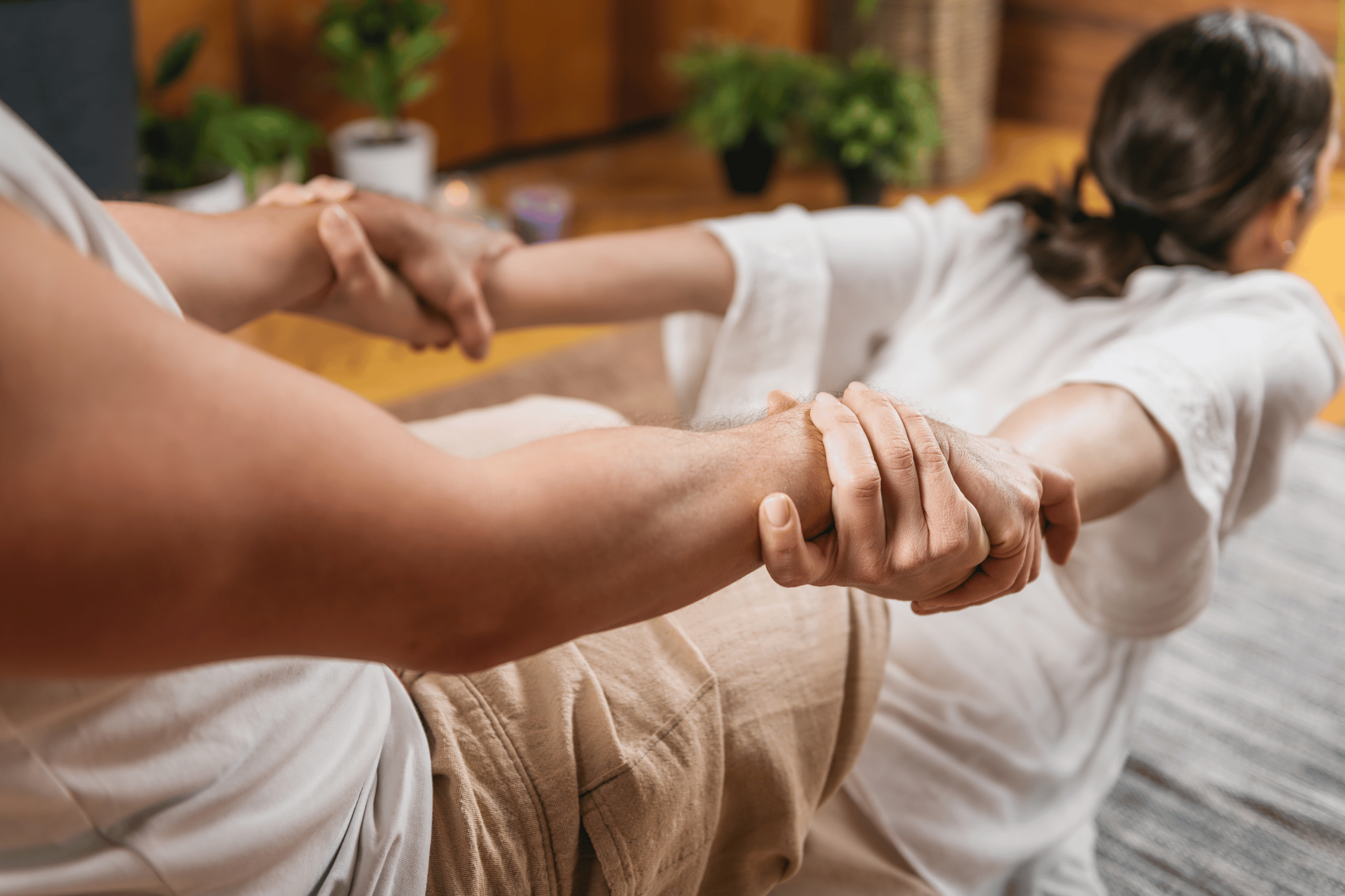 Image 1 of 1