
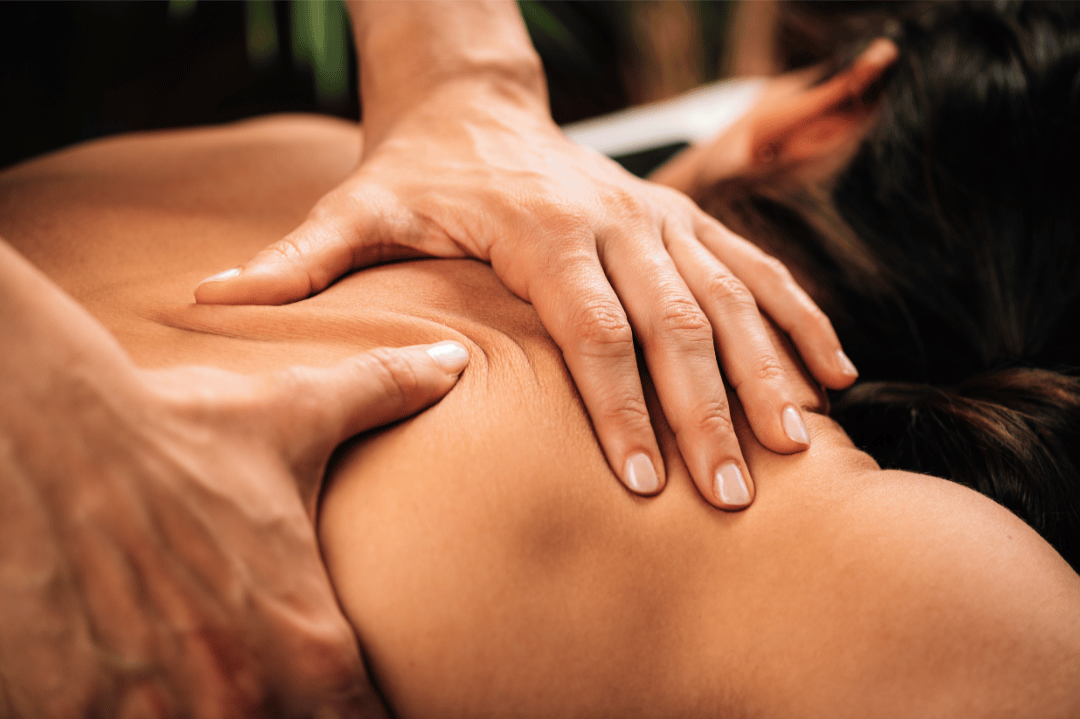
Deep Tissue Massage & Trigger Point Therapy
Part 1: Deep Tissue Training
Release, Restore, Rebalance
This course focuses on advanced techniques for addressing chronic muscle tension, adhesions, and postural imbalances. Participants will learn to apply deep, focused pressure safely and effectively, using slow, deliberate strokes to reach deeper layers of muscle and connective tissue. Emphasis is placed on body mechanics, client assessment, and treatment planning to ensure both therapist safety and optimal results for clients.
Part 2: Trigger Point Therapy
Targeting Pain at Its Source
Building on the foundations of deep tissue massage, this module teaches therapists to identify, evaluate, and treat myofascial trigger points — localized areas of tightness that often refer pain to other regions of the body. Through hands-on practice, participants will develop skills in palpation, sustained pressure, and release techniques, learning to integrate trigger point therapy into a full-session protocol for pain relief, improved mobility, and lasting therapeutic benefits.
Course Information
Fall Session: September 13–20–27 & October 4–18–25, 2026
Schedule: Six Sundays • 10:30am–1:30pm
Total Hours: 100h (Hands-on in-person training & Self-paced at-home study)
Price: $775
Register for Deep Tissue & Sports Massage and Save $100 automatically applied in your cart.
Reading List
Riggs, Art. (2007). Deep Tissue Massage: A Visual Guide to Techniques. North Atlantic Books, revised edition.
Finando, D., & Finando, S. (2005). Trigger Point Therapy for Myofascial Pain: The Practice of Informed Touch. Healing Arts Press.
Prerequisites
It is suggested to read these sections of the Riggs, Art. (2007). Deep Tissue Massage book prior to the start of the course.
Introduction: What is a Deep Tissue Massage?, Why Study Deep Tissue Massage?
Chapter 1: Principles of Deep Tissue Massage, Refining your Touch, Quality of Touch, A Few Words about Pain, Working in the Direction of the Stretch, Cross-Fiber Strokes, Separating Muscle Compartments
Chapter 2: Just Say “no” to Thumbs, Use of Knuckles Instead of Thumbs
Chapter 3: Anterior Leg, Posterior Leg, Tensor Fasciae Latae, Gluteus Maximus Muscle, Psoas and Iliacus Muscles, Working with the Breath, Working with Upper and Mid Back, Vertebrae, Ribs, Paraspinal Muscles, The Chest, The Rotator Cuff, Scapula
Chapter 4: Back Pain, Neck Pain
Chapter 5: Planning your Session, Stretching Strategies, Tennis and Golfer’s Elbow, Piriformis Syndrome Sciatica
Chapter 6: Seated Work, Seated Trapezius Work, Seated Scapula Work, Extending the Thoracic Spine, Stretching Lumbar Fascia